Saturday, 17 March 2018

Spoken Word, Llanelli, March 10th, 2018.


… waiting for my floor-spot at Ffrwnes Spoken Word, last week. I read my ‘Transformation’ story, which is due to be published later this month, in The Dawntreader magazine.

Ffrwnes is a great venue, with excellent acoustics – no need for a microphone (well, not for me, anyway). The audience was welcoming and engaged, and included some old friends, as Llanelli is where I used to lived (just up the road, in fact, along with the school I went to, my grandmother’s house, my grandfather’s surgery.) A lot of memories – and rather nice to go back in my new guise of ‘writer’.

Sunday, 14 January 2018

Looking forward, thinking back

Once again, a Happy New Year to you all (scary – it seems just the other day I was writing that for 2017!)

The New Year’s resolution for 2018 is – no more resolutions… at least not those concerned with blogs.  Can’t believe I haven’t posted here since July, although, again, I am pleased that the main reason is because I’ve been working hard on my fiction.


This is a ‘snapshot’ of where I have placed my work this year, and there was also an online piece in Tales from the Forest (talesfromtheforest.net), together with some online Flash fiction in Spelk (spelkfiction.com) – something I was very pleased about as it was my first attempt at the shorter form. It’s a site that gives good author coverage, which is always welcome.

Saving the best for last – I’m so thrilled that my novella ‘Esther Bligh’ is being published by Holland House Books later this year. It’s a literary press, based in Newbury, and the editor, Robert Peett, has been very patient with this newcomer to the world of editing, proof-reading, etc.  I have, in fact, just finished reading through the proofs, which has finally made it seem real. It’s surprising how having an ISBN number can make some people so excited! Publication date is the 7th June, and blogging more about the process is something I certainly intend to do.


 I’ve also become rather interested in the novella form – whatever that might be. I attended a workshop recently taken by Cynan Jones, who said it wasn’t simply to do with word-count. Still thinking about that, whilst having started on my second (maybe).

Friday, 7 July 2017

Interview with "Irish Imbas"

Well, I didn’t keep to my resolution of a blog every month, but I haven’t let it bother me… unlike the girl in my story (see my two previous posts).  Besides, it’s been for the usual good reason – I’ve been too busy with other writing projects (more of which in a future blog, maybe later this month, so I’ll be squeezing two into July… perhaps!)

For this one, I thought I’d reprint an interview I did for the Irish Imbas Books newsletter (www.irishimbasbooks.com). I mentioned previously I had been short-listed for their 2017 Celtic Mythology short story competition, and I was thrilled to get second place. So my story ‘The Black Hen’ was printed in their anthology (the only Welsh theme to be included):

 
Photo courtesy of dp-multimedia © 2017


And I was asked by their publisher/editor, Brian O’Sullivan, to answer a few questions about it and Welsh/Celtic mythology in general.
  
1) Tell us a little bit about yourself.

I am lucky enough to live in one of the most beautiful parts of west Wales, close to the sea in Pembrokeshire. I am even more privileged to be able to spend my time walking on the coast-path, or working in my woodland garden. And yet, most days, you will find me staring at my computer, with a blank wall behind, pressing a key now and then – all of which is another way of describing the creative activity known as ‘writing’. And even though there are many hours when very few of those keys get pressed, writing is not so much ‘what I do’, as who I am.

2) What brought you to ‘The Black Hen’?

I have always been interested in the connection between myth and landscape. The Black Mountains, in mid Wales (another beautiful area, where we used to live) are a perfect example of this interaction. Here, you will find Llangorse Lake, with its lost realm under the waters; or, further into the mountains, Pwll-y-Wrach, the Witch’s Pool. The road south is where the Sin-eater haunts unwary travellers; the stream flowing past our house ran red – was it the sandstone from the hills above, or something more sinister?
This is the stuff of folk-lore, the experiences that feature in the lives of ‘ordinary’ people, rather than the grand battles and tragic romances of the Welsh Princes and their followers, as depicted in the Mabinogion. The tales that spring from them are passed down through the generations by the wise old man sitting by the farmhouse hearth, or the story-tellers, as they travel around the countryside. This is the kind of mythology I was drawn to write about.
I had the idea of a commune of women artists, who lived somewhere in the middle of the mountains. While they worked, each would tell a story, interweaving their particular art/craft with an element of folklore. They would be the new Keepers of Hand-me-down Tales. The setting of the mountains would be a constant throughout the whole, but there would be other linking features – characters such as the Old Women in the Square and Dyn Hysbys (the wise man); certain motifs. Each story would be concerned with an unhappy event from their childhoods, which, looking back on, they interpreted through myth.
 ‘The Black Hen’ is told by Rainbow, who makes patchwork, and looks after the chickens. When she was young, her baby brother disappeared, causing her mother to have episodes of mental illness, during which she believed her daughter to be the cause of her loss and grief. Rainbow sees this now as a changeling tale. Such stories are not, of course, exclusive to the Black Mountains, nor even to any of the Celtic nations. And, in fact, my story mixes elements from versions throughout Wales. The egg-shell feast for the reapers is from further north and west, and the remedy of killing a black hen from further south. But the story seemed to lend itself perfectly to our area, and many features in the tale are portrayed exactly as they were when we lived there.
There was, indeed, an old railway carriage, beneath an embankment, abandoned by Dr Beeching’s ‘reshaping’ of Britain’s rail system. Hay-on-Wye was the other side of the hills, with its self-styled King – a place where April Ashley, the first ‘celebrity’ transsexual, was welcomed. The fair did regularly visit the town car-park, and the small supermarket, with the gathering of gossiping women outside, most certainly did exist!
And this was something else I was trying to achieve – not simply to relate the old folk-tale of the changeling, the ‘crimbil’, but to interpret the contemporary in ‘mythical’ form as well, to show that such re-imagining is a never-ending process.
‘The Black Hen’ is my favourite of the Tales, which is why I am so pleased to see it in print, in the Celtic Mythology collection.

3) What are your views on Irish/Celtic mythology? Do you have any observations or sense on the status of mythology in the world at the moment?

Generally speaking, it seems to me that mythology in all its forms is thriving. From Disney’s latest fairy-tales, to TV crime dramas involving shamans, indigenous beliefs and rituals, it is more prevalent than it has ever been – and this is in an age of consumerism, capitalism and ‘new’ technology. But perhaps that’s where the reason lies. The monsters and cataclysmic events are still here, but in different forms, requiring more than ever some kind of explanation. So we find ourselves yearning for the metaphors of myth, which are somehow easier to understand – the big, bad wolf, rather than the psychopath killer, for instance.
With regard to Wales, we are, this year, celebrating being the Land of Myths and Legends, and have our own website to prove it (www.landoflegends.wales). Various events are taking place throughout the country – workshops, readings, tours linked to the stories and characters that ‘made’ Wales. This would seem to be an excellent indication of the sustained appeal of myth here, but I do worry that there is too much of a connection with tourism and commercialism, rather than simply the desire to educate people in this field. For example, when you click on the area of the map which includes the Black Mountains, there is no mention of Llangorse Lake or Pwll-y-Wrach, two of the most famous local legends.
Fortunately, story-telling is gaining in popularity throughout Wales, and myth, including folk-tales is always an ideal subject for this form of ‘spreading-the-word’  – including not only stories from Wales itself, but others from across the globe. And the re-working of the Mabinogion by eminent authors remains a favourite, though, sadly, few of the Welsh publishing houses seem interested in the ‘lesser’ tales.
With regard to Ireland, I recently spotted a post in Paul McVeigh’s writing blog, which declared that Irish folklore was very much alive and weird! This led me to a piece in the Irish Times about an artist named Michael Fortune, who is following in the tradition of the great Irish folklore gatherers. He has videoed hundreds of hours of people narrating the stories of their communities, where encounters with fairies and the like are regarded as quite normal. So it seems to me that the ‘handing-me-down’ of such tales, is in safe hands.
And, of course, Ireland is lucky enough to have Irish Imbas, and the Celtic Mythology collection, which (almost) single-handedly, keeps on producing and publishing stories in this field, to the benefit of all its devotees. Thank you!

4) What is the next project we can expect from you?

I’ve just finished a novella, based in Wales, which could be seen as a ghost story, or a psychological mystery.  I’m working on putting a collection of stories together – a quite different type of story from my ‘folk tales.’ And there’s a novel I’ve started researching, but haven’t got to first draft yet. I’d love to do a coastal version of the Keepers… who knows?


The next competition opens at the start of September – well worth entering, for those who write folk tales, myths etc. This year’s anthology is available in print form from Amazon, or to download on Kindle etc.


Sunday, 26 February 2017

"Q"

A short, quick piece, squeezed in before February 28th, so that I keep to my New Year’s resolution to put something up here every month…

Reading at the Cellar Bards (photo courtesy of dp-multimedia ©)
Here I am, in the Cellar Bards, Cardigan, reading from the story mentioned in my last blog – the runner-up in last year’s Cinnamon Press competition. As I said then, the story is entitled (W + D-d) x TQ/M x Na, the formula worked out to explain the most depressing day of the year.  In it, Q stands for the time since failing our New Year’s resolutions, so there’s a certain irony in my just managing to get this posted with two days to spare. Otherwise, that would be another resolution fallen by the wayside, along with the chocolate and the exercise…

I’m hoping to go back to the Bards, when the anthology is released, which should be in May. And I’ll be able to read the rest of the story from the actual printed book, then – always a great feeling.

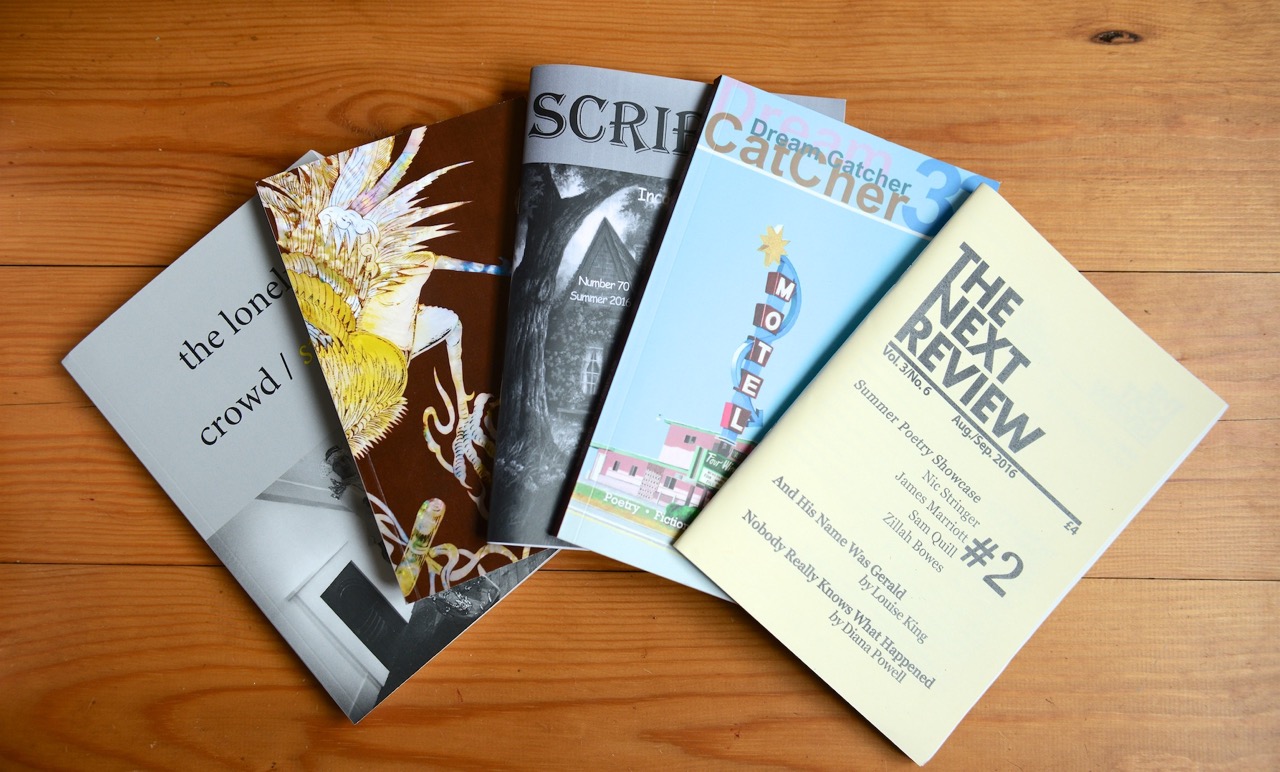
Writing-wise, a couple of goals for 2017 have already been achieved, which is very satisfying. One of my stories is published in the new edition of ‘The Lonely Crowd’, and another is to be featured in the next ‘Crannog’ magazine, one of Ireland’s top literary journals. And I’ve been short-listed for the Irish Imbas Celtic Mythology Competition.  More on all that next month… hopefully.

Sunday, 8 January 2017

Starting 2017

A happy and healthy 2017, to any of you kind enough to be reading this!
January can be a time of hopes and plans… all those resolutions we sign up to on New Year’s Eve.  But for some, it can also be rather bleak and depressing, especially when they feel they have failed in those good intentions after only a matter of weeks.
Soon, it will be Black Monday, the most depressing day of the year – at least according to some analysts, who have actually worked out a mathematical formula for the date.  This was the theme of my story, ‘(W + D – d) TQ/M x Na’ which was a runner-up in the 2016 Cinnamon short story prize, and will appear in an anthology published in the Spring.
As a result of this success, I was asked to apply for mentorship by the Press, and shortly before Christmas, I was thrilled to be told that the proposal for my short story collection had been accepted.


 Cinnamon is a small, independent publisher based in North Wales. Its aim is find distinctive voices amongst Welsh writers, whilst also providing a centre of excellence for literature from the UK and the world.

I am really looking forward to going through the mentoring process during 2017 – a plan I intend to embrace fully, and work hard towards.

Sadly, I have already given up on giving up chocolate, and exercising more.  But I have posted this blog, which is a tick in the box – at least for the first month of the year…

Wednesday, 2 November 2016

Submissions

Autumn.  The end of the year is approaching. The days are shortening, the leaves are falling, the birds are stocking up for the winter.  I haven’t progressed very far with my nature diary – no further than the extract below, in fact… just as I haven’t posted any new blogs.  But I like to think it’s for a good reason.  I’ve been concentrating on my fiction writing, and have written a new short story every month, as well as starting a new novel.  I’ve also been submitting regularly to a variety of journals, and have succeeded in being published in five – something I’m more than happy with.


(photo courtesy of dp-multimedia ©)

In between all these, I was a runner-up in the Cinnamon short story prize;  long-listed for the Sean O’Faolain; short-listed in the Over the Edge New Writer, and for the PENfro first chapter competition. And one of my ‘folktales’ is Seren Press’s Story of the Month right now (see their website!). So, all in all, it’s been a rewarding writing year.

For my publication in ‘The Lonely Crowd’ I was asked by the editor, John Lavin, to provide ‘Author’s notes’, outlining how I had come to write the story.  Those notes began and ended as follows:

‘I was supposed to be writing about a shooting.  A man and a woman, alone in a room; a gun. The gun is fired. … (But) for some reason, I couldn’t find my way into the tale.  I kept on changing my mind.  I couldn’t find my ‘voice’.  In the end, I put the story back into my ‘resting’ drawer, dissatisfied with it and myself….
… Writing this piece has reminded me of my original story idea, and I’ve been looking at it again. There are a lot of notes, and two different outlines… or three.  None of it is as bad as I thought, but I’m seeing quite a different angle now.  Something I like the idea of, making me think there’s definite potential for another story. Which shows, I like to think, as I’ve said elsewhere, that nothing you write is ever wasted.’

Well, I wrote that other story, and it’s the one published in ‘The Next Review’  – something I’m particularly pleased about, because it proves that there might be some truth in what I’ve always, rather uncertainly, believed.


Sunday, 31 January 2016

Writing from the Centre

Rain.   Rain.   And more rain.   That much was true.   Fingers of moisture, clawing their insidious way through the crevices of the turrets.   Tear-drops splashing from leaf to leaf, leaden enough to reach the floor from even the top of the sequoias.   Spider-webs, turned into be-jewelled filigree, woven amongst the hedges.   Rain.   Water.   Dank.   Damp.   Everywhere, in everything.   Day after day, after day.   One week into the next.

This is the opening paragraph of my story ‘Meeting Mr. Dickens’, which is reproduced in full in an earlier post.  Change a few words – turrets to chimneys, sequoias to sycamores – and it could be a description of the last few months at our home in Pembrokeshire.  Not just our home, of course.  It has been the same for the whole of the county.  Eglwyswrw to the east narrowly missed claiming the record for rain on the longest number of consecutive days.  The south has had flooding, and winter storms have battered the west.

Not the best time to make a New Year’s resolution to start keeping an occasional nature diary.  My first thought was ‘to write my square mile’ – a favourite writing-course subject.  But I wasn’t doing a writing-course, so I could change the rules if I wanted, couldn’t I?   I could make it three miles, to take in Abercastle, our closest coastal point.  Or I could ‘write my OS map’ –  one side of it, at least. In every other place we have lived, our village has been on the edge of the map, meaning we have always had to buy two.  Here, it’s different.  We live near Mathry.  We’re virtually in the centre of OS Explorer North Pembrokeshire, West Sheet.  True, a lot of the map above us is sea.  But, still, it’s a great area to live in.  It takes in St David’s and the surrounding peninsula to the west, a chunk of St Brides Bay below us; and that rugged northern coastline with its numerous small coves - my favourite part of all.  Well,  sometimes…   So that’s what I’ve decided to focus on.  But, then again, if I want to include some of my ‘other’ favourites that are off the page, well, perhaps I will.

Abercastle, Pembroekshire, Coast
Abercastle (photo courtesy of dp-multimedia ©)
Closer in, our house is at the edge of a small wood, with fields behind. And a short walk up the road takes me to a view of the Preselis, our mini-mountains.  Like the wider context, I consider this to be an ideal location – we’re not just restricted to the coast, breath-taking as that is.  Our landscape includes so much variety.  Just like the county itself.

 January isn’t the best month to start noting natural observations, even in ‘normal’ winters.  It’s a month of hibernation, with everything dormant, the ground ungiving, the cold stalling life.  Or that’s how it should be. But this year, except for one or two haphazard days, all we have had is that rain.  And wind.  And a strangely mild temperature.  Nothing is as it should be.  The roses haven’t stopped blooming.  My neighbour’s daffodils have been and gone.  The grass is still growing. And because of the rain, it’s been hard to get out – and to see what’s around you when you do. 
But we’re lucky.  The wood gives us wildlife on our doorstep.  Because of the food we provide, birds are a constant.  Almost every day, they tumble about the feeding-stations, in confusing profusion – like a scene from a Walt Disney fairy-tale movie.  When David Attenborough made his series ‘Life of Birds’, he remarked that birds provided man’s closest encounter with wildlife.  This is certainly true for us.  Pembrokeshire is, of course, a great place for all kinds of bird-watching.  It has some spectacular sea-birds, easily visible from land, like the puffins on Skomer, or the guillemots on Stack Rocks.  Then there are the estuary and river species – the herons, geese and ducks, interspersed with rare visitors, such as the spoonbill at Newport a few years ago.  Or the glossy ibis at Marloes mere.  Here, we’ve got the more usual garden varieties, but they are still a joy to see.

5th January.  Too many chaffinches to count. Great tits, blue tits, coal tits.  Rooks, jackdaws, robins, sparrows, wrens, woodpeckers, goldfinches.  The goldfinches with their fragile luminosity are a particular joy to see in these dull, depressing days.  They are a bird that features repeatedly in religious art, representing, amongst other things, the soul, redemption, protection.  More recently, Donna Tartt, in her novel ‘The Goldfinch’, used Carel Fabritius’s painting of the bird as her representation for beauty, and the main character’s connection with his dead mother.  Another ‘pure’ motif, perfectly encapsulated in that tiny, perfectly formed, gold and red plumage. 

Goldfinch
Goldfinch (photo courtesy of dp-multimedia ©)
Yet when you observe the behaviour of these finches, they are far removed from that noble image.  On the feeders, they hold their own amongst the bigger birds, squabbling amongst themselves, and fighting for their place, quite viciously, sometimes.  They are tenacious, greedy birds, seldom choosing to wait in line, for their turn, always going for the ‘best’ food, seldom put off by the wind and rain.  But then, ‘feeding and breeding’ is what it’s all about for most creatures.  Survival is the key word.  And the goldfinches are determined to succeed – their numbers have increased considerably in recent years.

Nuthatch
Nuthatch (photo courtesy of dp-multimedia ©)
 We also have a few less common additions to the regulars.  A pair of nuthatches has joined us this year – another striking bird, that darts in and darts out, to hide his food in the top of the sycamore, and a multitude of other places.  It has been great to see the greenfinches back – four, at least – after an absence of a couple of seasons. The opposite of their ‘gold’ cousins, they have struggled lately, on account of the trichomonosis virus. And yesterday I was watching a thrush.  Sad, really, to regard what was such a common British bird as a rare sighting.
Some we don’t always see.  Their calls reach up to us from the wood, but they stay hidden.  The cough of the pheasant.  The screech of the shy jay – ‘yscrech y coed’ in Welsh.  The ke-wick of the tawny owl, moving through the trees.

10th January.  Woken in the early hours by the owl.  Not the gentle twitwitwhoo, so often associated with them.  ‘Gwdihw’ – the Welsh word came to me, remembered from reading to the boys.  Such a lovely word.  Of course, there are a lot of myths associated with the owl in Wales, as in many other countries.  The best known is from the Mabinogion – Blodeuwedd (flower-face) being turned into an owl, never to show her face in daylight, and to be mobbed by all the other birds.  We haven’t seen the owl recently, but I have seen it in the past – being harassed by blackbirds, as it happened.   I probably shouldn’t be glad that I saw it, on account of all the ill-omens attached to it.  But I always feel privileged by any contact with nature, and though I love the folk-lore that comes from the countryside, I tend to dismiss those tales that speak of dark foreboding. Right now, I’m particularly hoping the rhyme about early bird-song isn’t true.
 ‘Os can yr adar cyn Chwefror, hwy griant cyn Mai.’
‘If birds sing before February, they will cry before May.’ 
In other words, it’s a sign of hard weather to come.  Particularly if the bird is a blackbird or a thrush… which I was lucky enough to hear singing yesterday…

20th January.  A wonderful starry sky when I got up.  We are lucky enough to be without street lights, here, which can allow us to have some really good views of the stars and the planets.
The rooks were ten minutes ahead of schedule today – another sign of a clear early morning.  They’ve been on the move at a quarter to eight for the past few weeks – rising from the wood, circling, then heading west, on the look out for food.
This was a proper winter’s day.  A bright blue, cloudless sky. Frost, even on the lower garden. Definitely a day for a walk up the road.  Ice in the puddles – I couldn’t help staring at it, it seemed so long since I had seen any. The frost on the banks looked strange.  I realised it was because the grass was long – it has kept growing.  The white streaks seemed to have been brushed on to each blade, rather than covering the whole.  As if a giant’s hairdresser had sprayed it delicately with some ‘Silver Moon’ hair-colour.  The fine day brought the tractors out in force.  A reminder that Pembrokeshire is still very much a farming county, no matter how much tourism seems to take it over, during the season.  Even more surprising, perhaps, is how the landscape has been formed by industry – and not just the modern gas and oil of the Haven Waterway to the south…

21st January, 2016.  I’m standing by the Blue Lagoon, at Abereiddi.  But I’m not looking at the deep, silent pool, as everyone else is doing.  Instead, I’m staring the other way, at the rock-wall facing the sea, facing the weather.  The winter storms have stolen away a layer of scree. What I see is a muddle of shapes and colours, like a crazy patchwork quilt.  Jagged greens, greys, copper.  Streaks of white, stitched through them.  It’s beautiful.
I’ve been here many times before, but I’ve never seen this.  I’ve seen plenty of other changes, worked by both man and weather.  Years ago, when we first visited, there was no safe, sturdy bridge to walk on.  We had to edge across, our backs to the cliff.  And we were almost always alone, when we reached the lagoon, except for the seals, and, if the timing was right, their pups, latched onto the steep sides like fluffy barnacles.
Now the pool has become a favourite destination for adventure tourists.  The shrieks of coasteering children echo off the high walls.  Strange bubbles break the surface, making you wonder what fearful monster lurks beneath.  But it’s just a diver, exploring this twenty-five metre deep, near-perfect circle of water.
All so different from the quiet, secret place of my childhood, that scene of natural wonder.  Except it wasn’t natural at all. The lagoon is a relic of the slate industry, which thrived in Pembrokeshire in the late eighteenth century. It was formed when the channel connecting the quarry to the sea was blasted, allowing the sea to flood in.
 My coloured wall is part of that quarry.  You have to go a lot further back for this small bay to be no more than a site of farming and fishing.  And even further for it to be a remote cove, with nothing but the sea-birds and the seals circling around.

Abereiddi, Abereiddy, Pembrokeshire, Coast
Abereiddi (photo courtesy of dp-multimedia ©)
23rd January.  Another beach walk, snatched in another few dry hours.  South, this time, to Newgale.
Somewhere else I’ve been many times, walking along its beach.  But, just as at Abereiddi, there’s something new to see.  There always is.  Changes with the time of year, the time of day, the tide.  The weather, again.  The storms of 2014 revealed the remains of an ancient forest, ten thousand years old.  Hunter-gatherers would have foraged for roots and berries where we now walked along the sand.  The trees have appeared again, this year, but that’s not what’s caught my eye.  Ahead of us, there’s a patch of pale, dry sand that the wind is catching.  I don’t why it should be just in one place, but it is. We walk into it, and the golden grains are blowing like waves just above the surface, rippling ahead.  They are flickering wraiths, dancing round our ankles, trying to trip us up, but leading us on.  And then it ends.

This is what I love – the infinite wonder of this place, the surprises it throws up, casually, almost.  As if it is saying ‘Look! And look again!’  Perhaps everyone feels the same about their own particular landscape.  But I like to think it’s something special about Pembrokeshire, where I live.  Here.